


For Professionals
For healthcare, long-term care, and other professionals interested in OTOKAI
OTOKAI is a dementia prevention program built around weekly AI-assisted music composition lessons.
OTOKAI is an innovative cognitive wellness program that uses music to support dementia prevention. Participants use a dedicated app to compare and select music inspired by a given theme and create a unique work of their own. Classes are held once a week. Anyone can enjoy a simple music composition experience, and the creative process naturally stimulates the brain, helping maintain cognitive function.
The program also encourages social interaction, helping participants discover new interests and build meaningful connections with others.
OTOKAI classes are conducted once a week in small groups of approximately ten participants. The program is available both in person and online, making it flexible for hospitals, care facilities, and individual participants alike. It can be delivered in a variety of formats, including group participation within facilities, in-person events at designated venues, and participation from home.
Typical Lesson Flow
* Because ongoing participation is required, cognitive assessments are not included in one-time events.
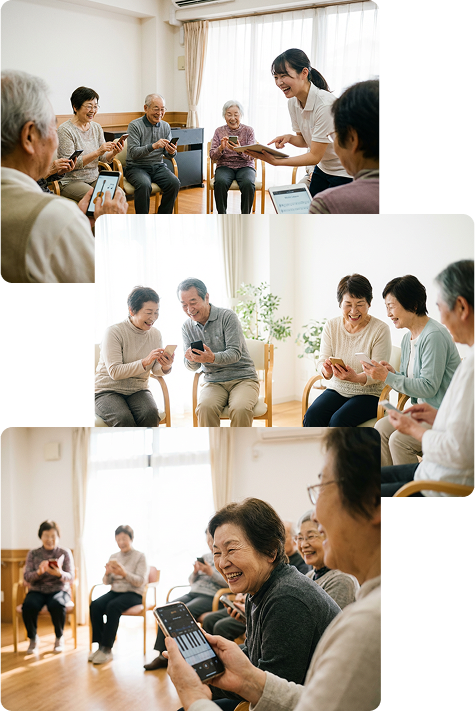
* Images shown are AI-generated illustrations.
Please refer to the PDF guide for app installation and account registration instructions. View the PDF →
Implementation Models

Organizational Implementation
Introduce the program at the organizational level within hospitals, care facilities, or similar institutions.
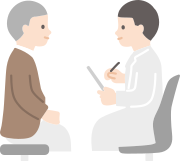
Professional Recommendation Model
Physicians and healthcare professionals recommend the program to individuals at risk of developing Mild Cognitive Impairment (MCI).
OTOKAI is a non-exercise, non-pharmacological cognitive support program.
It provides cognitive support through music-based activities without relying on physical exercise or medication. As a non-drug intervention, it can be effectively used to support cognitive health during the prevention and maintenance stages. Through music-based creative activities and social interaction, the program promotes cognitive stimulation, social connectedness, and emotional well-being.
No special equipment or musical experience is required. The small-group format makes the program easy to implement in healthcare and long-term care settings. Designed to complement existing rehabilitation programs and pharmacological treatments, it aims not only to maintain cognitive function but also to support emotional stability and reduce social isolation. Online participation is also available, making the program accessible to individuals living in remote areas or those with limited mobility.
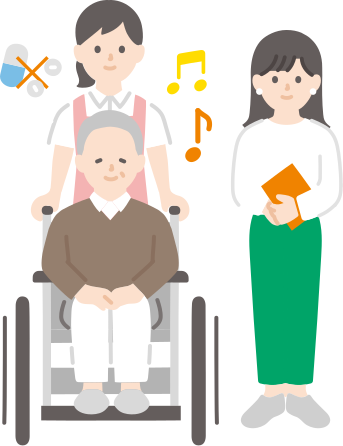
A Safe Dementia Prevention Program Supported by Scientific Evidence
OTOKAI offers numerous benefits whether implemented by hospitals and care facilities or recommended to individual participants. The following are just some examples. These benefits can be adapted to the goals of each organization and the needs of individual participants.

A Safe, Non-Drug-Based Program
As a non-pharmacological dementia prevention program, OTOKAI carries minimal risk of side effects and offers a high level of safety.
A Novel Approach to Cognitive Health
As an innovative alternative to medication-based approaches, the program supports the prevention of cognitive decline and the maintenance of cognitive function. Through music-based creativity and social interaction, it promotes cognitive stimulation, stronger social connections, and emotional well-being.
Accessible to a Wide Range of Participants
Because the program does not require physical exercise, it is accessible even to older adults with mobility limitations.

Supported by Research and Published Internationally
OTOKAI was developed in collaboration with medical professionals, providing a strong foundation of credibility. Results from the first pilot study were published in the international peer-reviewed journal Brain and Behavior.

Developed with Expertise in Both Medicine and Music
The program was developed with input from physicians, researchers, and music education specialists, ensuring a high level of professional credibility.

Data Collection and Analysis Through the Dedicated App
The dedicated app enables the collection and analysis of participant data. This allows long-term observation of participant progress and supports appropriate follow-up measures.
OTOKAI is supported by scientific evidence.
Background and Development History
Traditional dementia prevention approaches have largely focused on physical exercise and medication, creating barriers for older adults with physical limitations. In response, we developed this approach using sensory and emotional stimuli such as music and reminiscence, creating a method with minimal physical burden that can be applied to a wide range of older adults.
Publications and Research Presentations
In the first pilot study conducted jointly with the Advanced Institute of Industrial Technology (Satoh et al., Brain & Behavior, 2024), participants took part in weekly sessions over a six-month period (24 sessions in total). Comparisons before and after the intervention demonstrated maintenance and improvement of cognitive function. The project has been selected for Tokyo’s Strategic Innovation Promotion Program, and a second study is currently underway.
First Pilot Study Publication
Brain and Behavior (2024) — Satoh et al., “Transforming Text to Music Using Artificial Intelligence Improves the Frontal Lobe.”
Transformation of Text into Music Using Artificial Intelligence Improves Frontal Lobe Function in Healthy Older Adults.
Activities and Achievements to Date
- Presented at the 44th Annual Meeting of the Japan Society for Dementia Research, including a general presentation by Dr. Masayuki Satoh, and exhibited in the corporate exhibition area.
- Results from the second pilot study are also scheduled for future publication and conference presentation.
Supervising Physician and Research Advisor
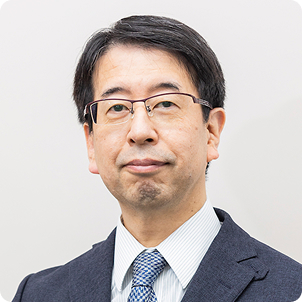
Masayuki Satoh
Formerly, Department of Dementia and Neuropsychology, Advanced Institute of Industrial Technology, Tokyo
Selected Publications
- Why Does Music Move the Human Heart?
- The Psychology of Music and Emotion
- How Effective Is Music Therapy? Exploring Its Potential Through Scientific Evidence
Dr. Satoh has a unique background, having studied music before becoming a physician, giving him expertise in both music and medicine. He is widely recognized as a leading authority in music therapy research within the dementia field and consistently advocates evidence-based approaches. By combining our AI music-generation technology with Dr. Satoh’s expertise in both medicine and music, we developed a beginner-friendly composition experience specifically designed to support dementia prevention.
Frequently Asked Questions
Below are answers to questions frequently received by the OTOKAI office.